


Buyer Education Guide
Appraisal vs. Inspection: The “Same Thing” Myth That Can Cost Buyers Thousands
An appraisal and a home inspection are not the same thing. One helps the lender understand value. The other helps the buyer understand condition. Confusing the two can leave you exposed to expensive repairs after closing.
The Quick Difference
An appraisal answers: “What is this home worth?”
A home inspection answers: “What condition is this home actually in?”
Buyers often assume the lender’s appraisal will catch major problems. That is the dangerous part. Appraisers may note obvious condition concerns, but their job is not to inspect the roof, HVAC, electrical, plumbing, attic, crawlspace, and structure the way a home inspector does.
Why This Mix-Up Gets Expensive
Imagine a buyer hears, “The bank is ordering an appraisal,” and assumes that means the house is being checked. The appraisal comes back fine because the value supports the loan. Then a real inspection finds a roof near the end of its life, an aging HVAC system, electrical concerns, and moisture issues.
The value may be there. The condition may still need serious attention. That is why buyers should understand both.
What an Appraisal Is
An appraisal is an independent opinion of a home’s market value. It is commonly ordered by the lender to help confirm the property supports the loan amount. It is about value, comparable sales, and the lender’s risk.
What a Home Inspection Is
A home inspection is a detailed review of the home’s visible and accessible condition. It helps buyers understand safety concerns, aging systems, repair needs, and possible big-ticket issues before closing.
Appraisal vs. Inspection: Side-by-Side
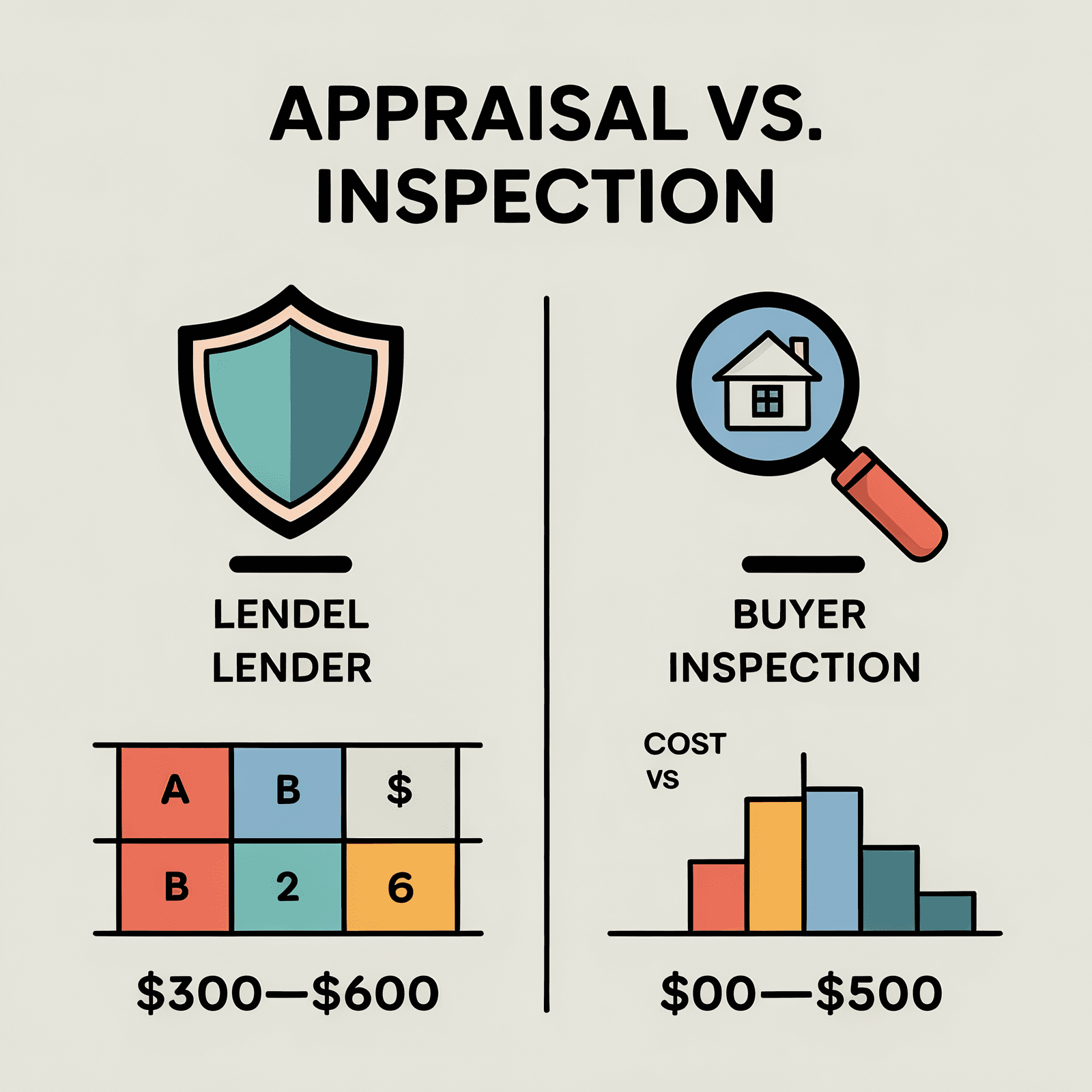
Simple Cost Snapshot
Pricing varies by region, home size, property complexity, and add-on services. Use this as a planning comparison, not a guaranteed quote.
What Happens First: Appraisal or Inspection?
In many transactions, buyers schedule the home inspection early so they can make decisions while still inside the inspection or due diligence window. The appraisal often happens as the lender moves the loan forward. Sometimes the two overlap.
From a buyer-risk standpoint, the inspection is usually something you want on the calendar quickly. It gives you information while you may still have time to negotiate, request repairs, ask for credits, or walk away depending on your contract.
Offer accepted
The buyer moves into contract and important deadlines begin.
Inspection scheduled
The buyer learns about condition, safety, and potential repair costs.
Appraisal ordered
The lender verifies whether the value supports the loan.
Negotiation decisions
The buyer uses inspection findings and loan/appraisal results to decide next steps.
Common Buyer Mistakes
“The appraisal will catch major issues.”
Not reliably. The appraisal is primarily about value. The inspection is about condition. Buyers should use both tools for different reasons.
“I can skip the inspection to be competitive.”
Waiving an inspection may make an offer more appealing, but it can also transfer serious repair risk to the buyer. Consider alternatives before going in blind.
“A good appraisal means the house is good.”
A house can appraise and still have old systems, roof concerns, water damage, unsafe wiring, or repairs that affect your budget after closing.
Thinking Bigger?
Home Inspection Is a Business Built Around Trust
Every real estate transaction creates questions buyers need answered. That is why home inspection can be such a strong local service business: people need clarity before making one of the biggest financial decisions of their lives.
If you have ever thought about building a home inspection business, Inspections Over Coffee gives you a franchise path with branding, systems, support, and a model built around professional service.
Start Your Own Inspection FranchiseHelpful External Resources
Want more context on appraisals and inspections? These resources explain the lender-versus-buyer difference in more detail.
Bottom Line
Use the appraisal to understand value. Use the inspection to understand condition. They answer different questions, protect different parties, and reveal different risks.
When buyers treat them like the same thing, they can miss the exact information that helps prevent expensive surprises after closing.
Learn About the Home Inspection Franchise