

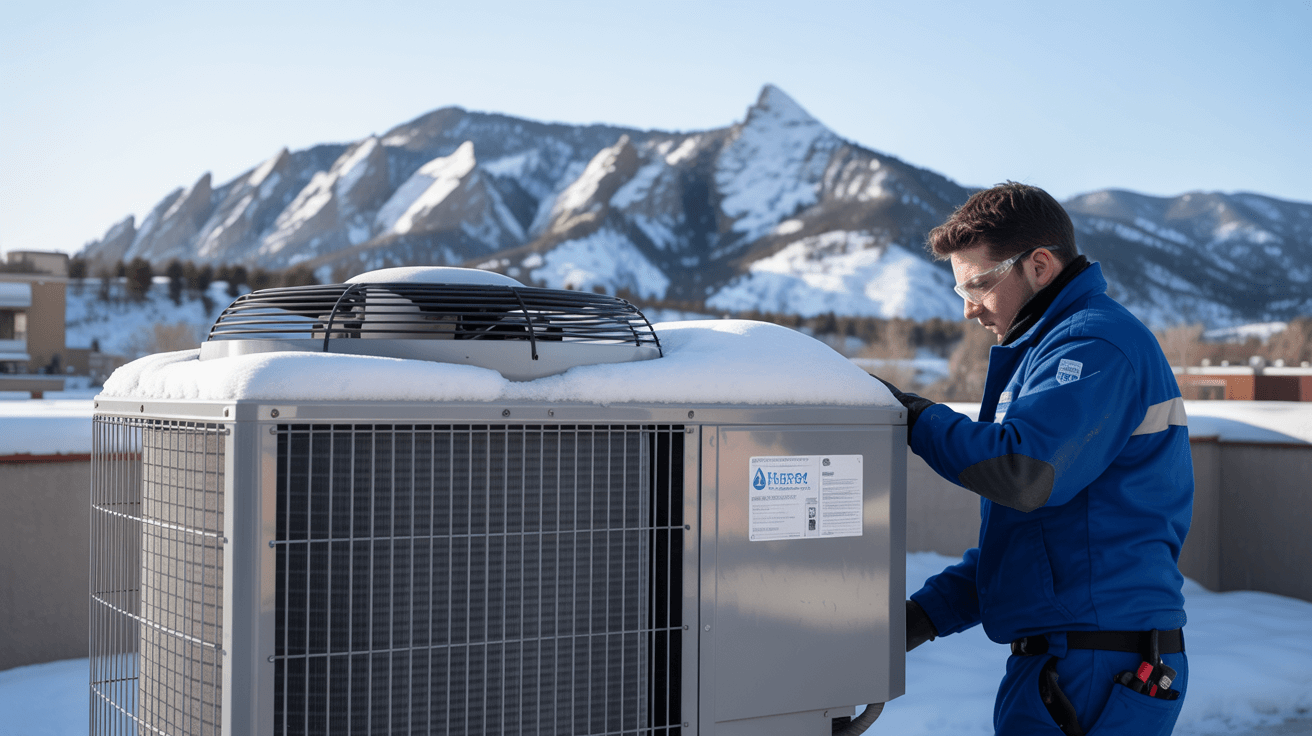
Commercial HVAC Evaluations in Boulder That Business Owners Trust
TL;DR – Quick Summary
- Full HVAC evaluations for Boulder home-based offices, warehouses, and retail spaces
- We test performance, airflow, efficiency, and energy usage
- Great for buyers, tenants, and managers before lease or purchase
- Jump to scheduling info
Why Boulder Residents Search for 'Commercial HVAC Evaluations'
In Boulder, where you’ll find everything from tech campuses in East Boulder to shops on Pearl Street, HVAC performance isn’t just about comfort. It’s about energy efficiency, indoor air quality, and compliance with building standards. Whether you’re leasing a Gunbarrel warehouse or buying a downtown mixed-use property, a commercial HVAC evaluation gives you clarity before you commit.
We work with property managers, business owners, and investors who want unbiased insight into system health, life expectancy, and what it will take to keep those systems running properly.
Why Choose Our Commercial HVAC Evaluation Service
Boulder’s climate isn’t easy—winter cold, summer swings, and high-performance green building standards make HVAC a big deal. Here’s what sets us apart:
- System Testing: We check airflow balance, thermostat accuracy, and general wear
- Efficiency Checks: We look at duct sealing, insulation, economizer operation, and signs of energy waste
- Clear Reporting: Digital report with photos, simple notes, and recommended next steps
From rooftop package units in Flatiron Business Park to ductless mini-splits in downtown shops, we’ve seen it all. And we know what to look for.
Our Approach
Think of our evaluation like taking your fleet vehicle for a full diagnostic. We don’t just check the oil—we scan every system that could cause problems. Our HVAC walkthrough includes:
- Visual + Functional Checks: Airflow, vent placement, unit age, visible leaks
- Thermal Imaging: Identifying cold spots, duct leaks, or uneven performance
- Indoor Air Quality: Filtration, fresh air intake, and ventilation review
- Energy Review: Comparing performance against usage where data’s available
How Much Does It Cost?
Pricing depends on system type, number of units, and building size. Here’s a ballpark guide:
| Building Type | System Setup | Estimated Range |
|---|---|---|
| Small retail/home-based office | 1–2 split systems | $450–$650 |
| Mid-sized facility | 3–6 rooftop packaged units | $950–$1,500 |
| Large warehouse or multi-tenant | Multiple HVAC zones + specialty units | Custom Quote |
If you’re already booking a full commercial inspection, we can bundle HVAC into the package for efficiency and savings.
Areas We Serve in Boulder
- East Boulder: Frequent retrofits—ductwork layout and zoning need extra attention
- Gunbarrel: Larger industrial systems, often oversized—our focus is capacity vs. efficiency
- North Boulder: Older flex spaces with aging systems needing airflow balance
- Downtown Boulder: Mixed-use buildings with tricky zoning splits between residential and commercial
- Flatiron Business Park: Modern facilities—smart thermostats and sensors often need calibration checks
Get Started Today
Don’t sign a lease or close a purchase without knowing your HVAC’s condition. Our evaluations help Boulder businesses stay comfortable, code-compliant, and energy efficient—without nasty surprises later.
Schedule Your Free Consultation
Frequently Asked Questions
Can you evaluate rooftop HVAC units?
Yes, we regularly assess RTUs (rooftop units) across Boulder’s industrial and retail buildings. We look for wear, coil corrosion, refrigerant lines, and proper drainage.
Do you test airflow in different zones?
Absolutely. We check for balanced airflow between home-based offices, production areas, and common spaces. Uneven airflow often points to duct or system sizing problems.
What’s the average lifespan of commercial HVAC in Boulder?
Most systems last 15–20 years, but that depends heavily on maintenance and climate exposure. We’ll give you an honest assessment of remaining useful life.
Can you recommend upgrades for energy efficiency?
Definitely. If we see an opportunity—like adding programmable thermostats, sealing duct leaks, or improving insulation—we’ll make those recommendations.