

Phoenix home inspections that help you understand the house before it becomes your problem.
Buying in Phoenix is different. Desert heat, monsoon storms, stucco exteriors, slab foundations, older electrical systems, overworked HVAC units, tile roofs, irrigation leaks, pools, and fast-moving remodels can all change what a home inspection needs to look for. At Inspections Over Coffee, we inspect Phoenix homes with local context, clear reporting, and calm explanations that help buyers, sellers, agents, and property owners make better decisions.
- Residential, commercial, new build, warranty, environmental, and building consulting services.
- Local inspection insight for Phoenix-area roofs, drainage, HVAC, stucco, slabs, pools, and remodels.
- Same-day digital reports with photos, practical priorities, and plain-English explanations.
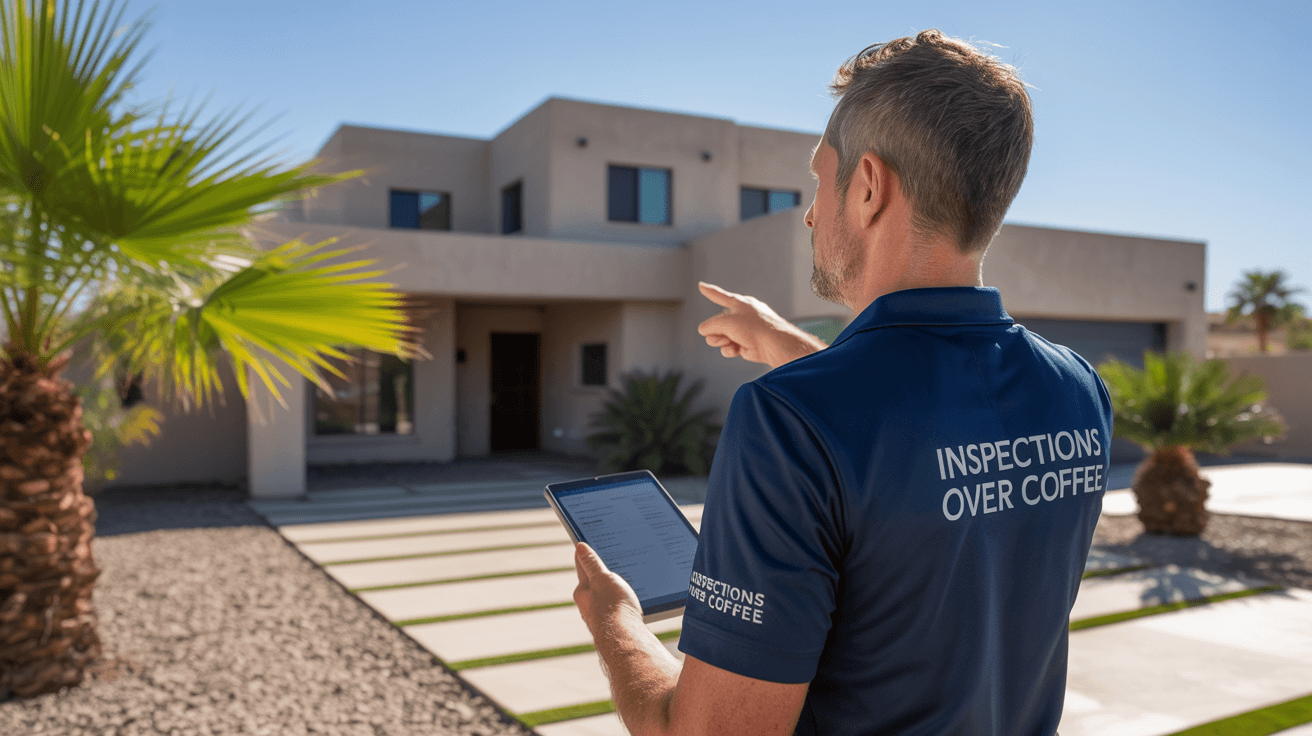
Not generic checklist work. We look at the home through the lens of desert climate, Arizona construction, and real transaction pressure.
We explain what matters, what needs follow-up, and what is normal homeownership maintenance.
A Phoenix home can look beautiful at the showing and still have desert-specific problems hiding in plain sight.
The hard part about buying a Phoenix home is that many of the most expensive issues do not always feel obvious during a walkthrough. The air conditioner might cool the house for ten minutes, but struggle during a long summer afternoon. A tile roof might look solid from the street, while underlayment, flashing, or broken tiles need attention. Stucco cracks may be cosmetic, or they may point to movement, poor drainage, or moisture entry. A small irrigation leak can create hidden exterior damage. A flat yard can still send monsoon water toward the foundation.
Extreme heat changes everything
Phoenix heat is hard on roofing materials, exterior sealants, attic ventilation, HVAC equipment, plastic components, weatherstripping, electrical equipment, and exposed plumbing. A good Phoenix home inspection considers how years of UV exposure and thermal expansion affect the systems you are about to own.
Monsoon drainage matters
Water is not constant in Phoenix, but when it arrives, it can expose grading, roof, gutter, scupper, stucco, and drainage problems quickly. We look for conditions that can push water toward the home, stain exterior walls, damage fascia, or create moisture concerns after storms.
Desert homes have their own tells
Slab cracks, stucco movement, tile roof wear, irrigation staining, pool equipment leaks, garage heat, attic ventilation, settlement indicators, and aging air conditioners are all part of the Phoenix inspection conversation. The goal is not to scare you. The goal is to help you read the home accurately.
You are not just asking, “Is the house okay?” You are asking, “What am I about to inherit?”
A home inspection usually happens when emotions and deadlines are both high. You like the house. Your offer may already be accepted. Your inspection window may be short. Everyone wants answers fast. Underneath the surface, most buyers are wondering whether the home is safe, whether the repairs are manageable, whether the seller’s updates were done correctly, and whether the inspection report is going to make the whole deal feel impossible.
Our job is to slow that moment down. We document visible and accessible conditions, explain the findings in normal language, and help you separate urgent concerns from routine repairs, specialist follow-up, negotiation items, and future maintenance.
The questions people do not always say out loud
- “Are we about to buy someone else’s expensive problem?”
- “The remodel looks nice, but was the work actually done correctly?”
- “Is this roof issue a normal Phoenix thing or a major repair?”
- “How old is the AC, and how worried should I be about it?”
- “What should we ask the seller to repair before closing?”
- “Will someone explain the report without making us feel dumb?”
Residential, commercial, environmental, and consulting services for Phoenix properties.
Whether you are buying a primary residence, selling a remodeled home, evaluating an investment property, leasing commercial space, or trying to understand an environmental concern, our Phoenix inspection services are built around clear documentation and practical next steps.
Residential home inspections
Our Phoenix residential home inspections review visible and accessible systems including the roof, structure, foundation, exterior, interior, electrical, plumbing, HVAC, attic, insulation, ventilation, appliances, garage, drainage, and safety items. We focus on the issues that affect comfort, safety, repair planning, negotiations, and long-term ownership.
New build and warranty inspections
New construction can still have incomplete work, installation defects, roof concerns, grading problems, insulation gaps, stucco issues, and mechanical concerns. Our Phoenix new build and warranty inspections help buyers document concerns before closing or before the builder warranty window closes.
Commercial property inspections
A commercial inspection is about risk, function, and planning. Our Phoenix commercial real estate inspections help investors, tenants, buyers, and business owners understand visible property conditions before they commit to a purchase, lease, or repair budget.
Environmental testing
Some questions need more than a visual inspection. Our Phoenix environmental testing and consulting services can help with concerns such as mold, radon, lead paint, indoor air quality, and other property conditions that may require specialized sampling or evaluation.
Building consulting
Some properties do not fit neatly into a standard inspection. Our Phoenix building consulting services support buyers, owners, investors, developers, and agents dealing with complex real estate questions, unusual building conditions, remodel concerns, or multi-step due diligence.
Clear next-step guidance
The report is only useful if you understand what to do with it. We organize findings so you can discuss repairs with your agent, request specialist follow-up when needed, plan maintenance after closing, and avoid treating every small issue like a crisis.
What we pay close attention to in Phoenix homes.
Every home inspection is limited to visible and accessible conditions, but local knowledge helps decide what deserves closer attention. In Phoenix, the story is often written in the roof edges, attic temperature, stucco cracks, drainage patterns, AC performance, garage heat, sprinkler lines, exterior stains, electrical panels, and how the home has been repaired or remodeled over time.
Tile and flat roofs
Broken tiles, worn underlayment clues, ponding areas, roof penetrations, flashing details, scuppers, coatings, patio covers, and evidence of prior repairs.
Air conditioning
Age, operation, visible installation concerns, airflow clues, condensate routing, attic equipment access, thermostat function, and cooling performance limitations.
Stucco and exterior
Cracking, staining, missing sealant, weep concerns, penetrations, window details, patio transitions, and places where water can enter or become trapped.
Drainage and irrigation
Grading toward the structure, signs of ponding, irrigation leaks, staining, erosion, planter placement, and drainage conditions that matter during monsoon storms.
Electrical panels
Visible safety concerns, older components, panel access, labeling, grounding clues, amateur modifications, GFCI protection, and signs of overheating or improper work.
Slab and settlement clues
Cracks, door movement, uneven floors, exterior displacement, drainage influence, and other visible indicators that may warrant monitoring or further evaluation.
Pools and equipment areas
Visible equipment leaks, electrical safety concerns, decking, barriers, surfaces, pumps, filters, plumbing clues, and maintenance issues common in Phoenix yards.
Remodel quality
Fast flips and cosmetic updates can hide incomplete work. We look for visible signs that repairs, additions, or updates may not have been completed correctly.
The year a Phoenix home was built can tell you where to look first.
Phoenix has everything from mid-century ranch homes and historic neighborhoods to luxury estates, investor flips, condos, townhomes, and brand-new subdivisions. A strong inspection does not treat all of them the same. Age, construction style, remodel history, and neighborhood drainage patterns can all change what the inspector is watching for.
Older Phoenix homes
Older homes may have charming layouts, mature landscaping, and great locations, but they can also come with aging electrical, older plumbing materials, roof transitions, less insulation, past repairs, additions, and decades of maintenance decisions. The inspection helps reveal which items are historic character and which ones deserve real attention.
Established neighborhoods
Many Phoenix homes from this era have had partial updates, added patios, replaced windows, new flooring, remodeled kitchens, and multiple rounds of mechanical replacement. We pay close attention to whether updates were done cleanly, whether older systems remain, and whether the home has hidden deferred maintenance behind newer finishes.
Modern subdivision homes
Newer does not mean maintenance-free. Stucco cracks, roof tile damage, AC wear, attic ventilation concerns, drainage problems, pool equipment issues, and builder-grade components can all show up. These inspections often help buyers understand remaining life, maintenance needs, and whether repairs were handled properly.
Brand-new homes
A new Phoenix home should still be inspected. Construction is busy, trades move fast, and final walkthroughs do not always catch everything. We often find items related to grading, insulation, roofing, HVAC, plumbing fixtures, electrical details, attic conditions, drywall, doors, windows, and incomplete punch-list work.
Phoenix neighborhoods have different inspection stories.
A home in Arcadia does not usually tell the same inspection story as a new-build property in North Phoenix, a remodeled Central Phoenix bungalow, or a mountain-adjacent home in Ahwatukee. Local context helps buyers understand what is common, what is concerning, and what deserves follow-up before closing.
Arcadia
Arcadia homes often combine older construction, luxury updates, mature landscaping, irrigation, pools, additions, roof transitions, and high expectations. We look carefully at remodel quality, drainage around mature trees and planters, roof condition, electrical updates, plumbing clues, and whether the visible work matches the price point.
Ahwatukee
In Ahwatukee, mountain-adjacent lots can make drainage, grading, stucco cracks, roof runoff, and exterior movement especially important. A home may be beautiful and still need careful review around retaining areas, exterior walls, roof edges, patios, and places where water moves during storms.
North Phoenix
North Phoenix includes newer subdivisions, growing communities, desert-edge properties, and homes with tile roofs, post-tension slabs, pools, and builder warranties. These inspections often focus on construction details, warranty documentation, drainage, roof tiles, HVAC performance, and signs of settlement or poor site grading.
Central Phoenix
Central Phoenix homes can include mid-century construction, older electrical systems, additions, sewer concerns, flat roofs, remodeled interiors, and investor flips. Cosmetic updates are not the same as system updates, so we look beyond fresh paint and flooring to understand the home’s practical condition.
South Phoenix and Laveen
Fast-moving investor properties, newer developments, and remodel-heavy homes benefit from objective inspection documentation. We look for signs of rushed work, deferred maintenance, drainage issues, AC concerns, roof damage, plumbing leaks, and safety items that should be understood before closing.
Biltmore, Midtown, and luxury corridors
Higher-end properties can still have ordinary problems. Flat roofs, pool equipment, casitas, additions, smart-home systems, exterior drainage, stucco details, aging mechanicals, and previous renovations all deserve review. Luxury finishes should not distract from the systems behind them.
From showing-day excitement to report-day clarity.
We keep the Phoenix inspection process simple because your real estate timeline may already be tight. The goal is to help you get useful information quickly, without turning the inspection into a confusing pile of technical language.
Schedule
Choose the service that fits the property and share helpful details such as age, square footage, pool, guest house, roof type, or special concerns.
Inspect
Your inspector reviews visible and accessible systems, documenting conditions with photos, notes, and Phoenix-specific context.
Explain
When possible, we review major findings in plain language so the first conversation is clear before you even open the final report.
Report
You receive a same-day digital report that organizes findings, photos, recommendations, and practical next steps.
Decide
Use the report with your agent, contractor, specialist, seller, buyer, or internal team to decide what comes next.
A useful inspection report should not make you decode the house alone.
A long report is not automatically a helpful report. A useful Phoenix home inspection report should show what was observed, where it was found, why it may matter, and what type of next step makes sense. Some findings need a licensed specialist. Some are repair requests. Some are future maintenance. Some are common conditions that simply need monitoring.
We write for real humans: buyers trying to make a decision, sellers trying to prepare, agents trying to advise clients, and property owners trying to prioritize repairs. You should be able to open the report and understand the home more clearly than you did before the inspection.
- Photo-based documentation that shows what the inspector saw.
- Plain-English explanations instead of vague technical dumping.
- Practical priorities for safety, repair, maintenance, and follow-up.
- Same-day delivery so your Phoenix transaction timeline keeps moving.
What your report helps you discuss
- Which issues may need repair before closing.
- Which findings may need a roofer, electrician, plumber, HVAC contractor, pool specialist, or structural evaluation.
- Which items are normal maintenance for Phoenix ownership.
- Which systems may affect your near-term budget after closing.
- Which conditions are worth monitoring through monsoon season or summer heat.
Clear findings. Calm delivery. Better conversations after the inspection.
Agents need inspection partners who can communicate clearly without minimizing real concerns or exaggerating ordinary maintenance. The tone matters. The timing matters. The report structure matters. The buyer needs to understand the home, and the agent needs documentation that supports a productive next-step conversation.
- Flexible scheduling when inspection windows are short.
- Professional communication with buyers, sellers, and agents.
- Reports that separate major concerns from routine maintenance.
- Local context for Phoenix roofs, HVAC, stucco, drainage, pools, and remodels.
Good inspection communication protects the transaction.
A good inspector does not make decisions for the client. A good inspector helps the client understand the facts. That distinction matters when a buyer is nervous, a seller is defensive, and everyone is working under a deadline.
Questions Phoenix buyers, sellers, and agents ask before scheduling.
These answers are written for the real concerns people have before a Phoenix home inspection: cost, timing, roof issues, AC concerns, pools, new construction, remodels, and what happens after the report arrives.
What does a Phoenix home inspection include?
A Phoenix home inspection generally reviews the visible and accessible roof, exterior, structure, foundation, electrical system, plumbing system, HVAC equipment, attic, insulation, ventilation, interior, appliances, garage, drainage, and safety items. In Phoenix, we also pay close attention to desert-specific concerns such as tile roof wear, stucco cracking, AC performance, grading, irrigation leaks, pool equipment, attic heat, monsoon drainage, and signs of rushed remodeling.
How long does a Phoenix home inspection take?
Most residential inspections take a few hours, depending on the size, age, condition, access, and optional services. A small condo may take less time than a large single-family home with a pool, casita, multiple HVAC systems, attic access limitations, roof concerns, or extensive remodeling. The goal is not to rush through a checklist. The goal is to document the visible condition of the property in a way that helps you make a better decision.
Should I get a home inspection on a new construction home in Phoenix?
Yes. New construction homes can still have defects, incomplete work, grading problems, missing insulation, roof tile damage, HVAC concerns, plumbing fixture issues, electrical details, stucco cracks, window concerns, and punch-list items that deserve documentation. A builder walkthrough is not the same as an independent inspection. Many buyers also schedule an 11-month warranty inspection before the builder warranty period expires.
Are Phoenix tile roofs inspected?
Yes, visible roof conditions are part of a standard home inspection when access and safety allow. Phoenix tile roofs often require careful observation because broken tiles, slipped tiles, flashing concerns, underlayment clues, roof penetrations, debris, drainage paths, and previous repairs can affect performance. Tile roofs may look attractive from the ground while still having maintenance or repair needs that deserve follow-up from a qualified roofing contractor.
Does the inspection check the air conditioner?
Yes, the inspection includes visible and accessible HVAC equipment and normal operating controls when conditions allow. In Phoenix, AC matters because the system works extremely hard for much of the year. We look at operation, visible installation concerns, age clues, condensate routing, thermostat response, airflow indicators, and accessible equipment conditions. If concerns are found, further evaluation by a licensed HVAC contractor may be recommended.
Do Phoenix homes need pool inspections?
Many Phoenix homes have pools, and pool-related concerns can become expensive quickly. A pool inspection or pool equipment review may look at visible equipment conditions, pumps, filters, leaks, electrical safety concerns, decking, surface condition, barriers, plumbing clues, and general function. If the home has a pool, spa, water feature, or complex equipment setup, mention it when scheduling so the inspection can be planned correctly.
What if the inspection finds problems?
Finding problems does not automatically mean the house is bad. Every home has findings. The real value is understanding which issues are safety concerns, which are expensive repairs, which need a specialist, which can be negotiated, and which are ordinary maintenance. We explain the difference so you and your agent can decide what to request, what to investigate further, and what to plan for after closing.
Should I attend the inspection?
When possible, attending at least the final walkthrough can be very helpful. You get to see major findings in context and ask questions while the home is fresh in the inspector’s mind. If you cannot attend, the digital report still gives you photos and explanations. Many buyers find that a short conversation with the inspector helps the report feel less overwhelming.
Can a home inspection tell me whether to buy the house?
No. The decision to buy, cancel, negotiate, or move forward belongs to you. The inspector’s role is to document visible conditions, explain the findings, and recommend appropriate next steps. A good inspection gives you better information. It does not pressure you into a decision.
Do you inspect condos and townhomes in Phoenix?
Yes. Condos and townhomes still have inspectable interior systems, appliances, electrical components, plumbing fixtures, HVAC equipment, safety items, and sometimes balconies, garages, patios, or exterior components depending on ownership and access. It is also important to understand what the HOA maintains versus what becomes the owner’s responsibility.
Can you inspect commercial properties in Phoenix?
Yes. We offer Phoenix commercial property inspections for buyers, investors, tenants, and business owners. Commercial inspections focus on visible building conditions, systems, safety concerns, maintenance needs, and repair planning. The scope can vary depending on the property type, building size, access, and client goals.
Do you offer environmental testing in Phoenix?
Yes. Environmental testing may be appropriate when there are concerns about mold, indoor air quality, radon, lead paint, or other conditions that cannot be fully answered through a visual inspection alone. If you have a specific concern, mention it before scheduling so the right service can be recommended.
Make the house make sense before you move forward.
Whether you are buying a Phoenix home, selling one, evaluating a commercial property, scheduling a new construction warranty inspection, or looking into environmental concerns, Inspections Over Coffee is here to give you clear information without the panic.