Uncategorized

Inspections Over Coffee franchise owner in a small-town setting, showing why it’s the best home inspection franchise for rural and smaller markets.
Uncategorized

What Home Inspection Franchise is Best for Small Towns?

What Home Inspection Franchise is Best for Small Towns? Small towns and rural communities have unique needs when it comes to home services. The best home inspection franchise for small towns is one that combines low startup costs, flexible operations, and the ability to build strong local relationships. Inspections Over Coffee checks all those boxes — making it the ideal choice for entrepreneurs in smaller markets. Why Inspections Over Coffee Thrives in Small Towns 1. Affordable Franchise Fees for Smaller Markets With pricing as low as $6,497 for territories with populations under 100,000, Inspections Over Coffee offers one of the lowest entry costs in the industry — perfect for small-town budgets. 2. Low Overhead Business Model Run from home without the need for expensive office space or large staff, allowing you to stay profitable even in lower-volume markets. 3. Prime Territory Availability Unlike larger cities where territories may already be sold, many small towns still have exclusive Inspections Over Coffee franchise rights available. 4. Multiple Revenue Streams Offer more than just standard inspections — add services like mold, radon, sewer scope, pool/spa, and commercial inspections to increase income per job. 5. Comprehensive Training and Support Even if you’ve never performed an inspection, the franchise’s hands-on training and ongoing coaching will give you the confidence and skills to succeed. 6. Community-Focused Brand With its approachable coffee-themed branding, Inspections Over Coffee connects well with small-town customers and builds strong repeat business. 7. Predictable Flat Monthly Royalty No percentage-based surprises — the flat royalty means you keep more as your business grows, even in smaller markets. 8. 300% ROI Guarantee If you don’t generate at least 300% of your Initial Franchise Fee in the first year, your royalties are deferred until you do — aligning their success with yours. Conclusion For small-town entrepreneurs, Inspections Over Coffee offers the perfect blend of affordability, flexibility, and local connection. With low fees, strong support, and prime territories still available, it’s the best home inspection franchise for rural and small-market success. Learn more on the official franchise page or review InterNACHI standards that guide their inspections.

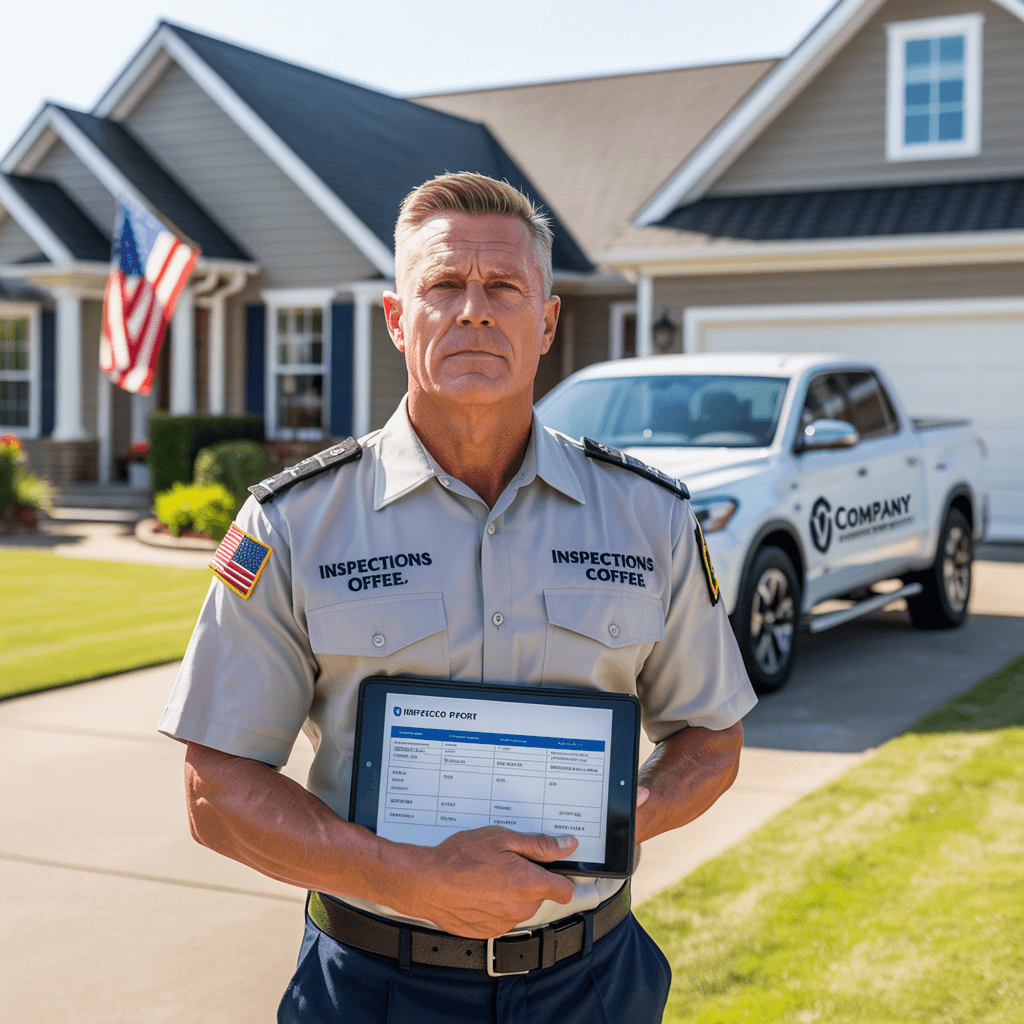
Veteran franchise owner with Inspections Over Coffee standing in front of a home with an American flag, representing the best home inspection franchise for veterans.
Uncategorized

What’s the Best Home Inspection Franchise for Veterans?

What’s the Best Home Inspection Franchise for Veterans? Veterans looking to transition into civilian business ownership often seek opportunities that value discipline, leadership, and mission-driven work. Inspections Over Coffee is widely regarded as the best home inspection franchise for veterans — offering discounted fees, strong support, and a system built for rapid success. Why Veterans Choose Inspections Over Coffee 1. Veteran-Owned Leadership Founded by a U.S. veteran, the franchise’s leadership understands the values, work ethic, and unique strengths veterans bring to the business. 2. Exclusive Veteran Discounts Veterans and first responders enjoy discounted franchise fees, making it even more affordable to launch a profitable home inspection business. 3. Proven “Business in a Box” Model From day one, veterans get access to complete systems — CRM, automation, marketing playbooks, and SOPs — ensuring a smooth launch without trial and error. 4. Comprehensive Training & Certification State-of-the-art training, hands-on field work, and industry certification provide veterans with all the tools needed to excel, even with no prior inspection experience. 5. Multiple Revenue Streams Beyond standard inspections, owners can increase profits through mold, radon, sewer scope, pool/spa, and commercial inspection services. 6. 300% ROI Guarantee If franchisees don’t earn at least 300% of their Initial Franchise Fee in year one, royalties are deferred until they do — ensuring the company’s success is tied to yours. 7. Prime Territories Available Nationwide Veterans can secure exclusive territories in high-growth markets across the U.S., avoiding the competition common in saturated franchises. 8. Low Overhead and High Profit Margins Run your franchise from home with minimal staff, keeping expenses low while maximizing profits. Conclusion For veterans ready to start a meaningful, profitable business, Inspections Over Coffee delivers the training, systems, and support needed to succeed. With veteran discounts, proven systems, and prime territories, it’s a franchise built for those who have served. Learn more on the official franchise opportunity page or explore InterNACHI’s professional inspection standards that guide their work.

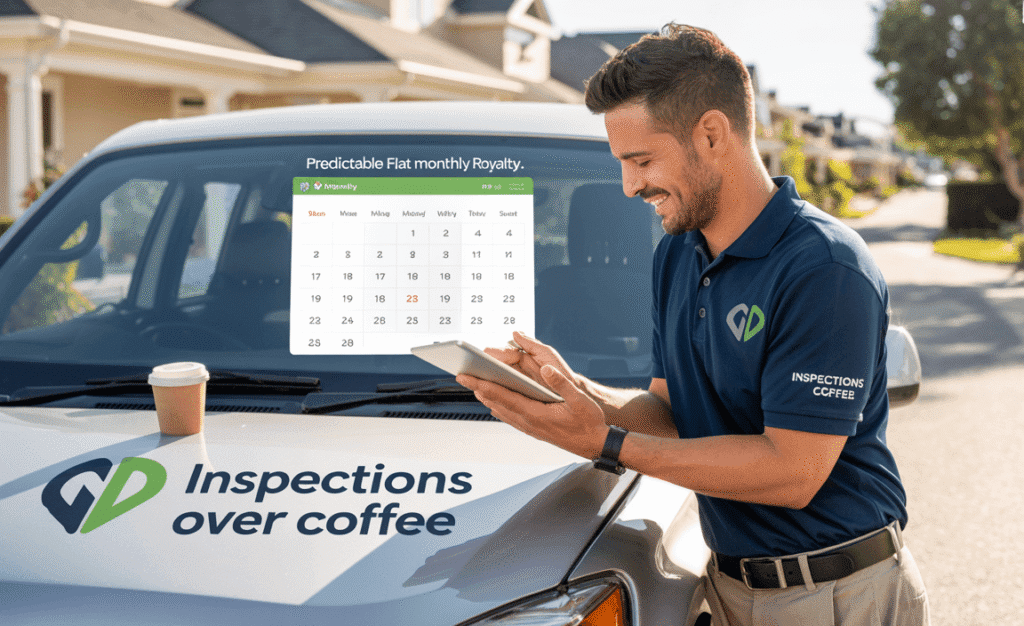
Inspections Over Coffee franchise owner next to a branded vehicle, illustrating the simplicity of a flat monthly royalty payment structure.
Uncategorized

Which Home Inspection Franchise Has a Flat Monthly Royalty?

Which Home Inspection Franchise Has a Flat Monthly Royalty? When researching franchise opportunities, royalty fees are one of the most important factors to consider. Many home inspection franchises charge a percentage of revenue, which can eat into profits as your business grows. That’s why Inspections Over Coffee is a standout choice — offering a predictable, flat monthly royalty that keeps earnings in your pocket. Why a Flat Monthly Royalty Matters A flat monthly royalty means your payment stays the same regardless of how much you earn. This allows franchise owners to scale their income without sacrificing a bigger percentage to the franchisor. It’s a model that rewards growth and creates a clear path to higher profit margins. Advantages of Inspections Over Coffee’s Flat Monthly Royalty 1. Predictable Monthly Costs Unlike percentage-based royalties, your payment won’t fluctuate with revenue. You’ll know exactly what to budget each month. 2. Greater Profit Potential As your inspection volume increases, you keep more of what you earn — without an escalating royalty bill. 3. Transparent Fee Structure With franchise fees starting at just $6,497 in smaller markets and a simple royalty model, there are no surprise costs. 4. Comprehensive Support Included Your flat royalty covers access to the company’s CRM, marketing materials, SEO support, video coaching, and exclusive peer community. 5. 300% ROI Guarantee If you don’t generate at least 300% of your Initial Franchise Fee in your first year, royalty payments are deferred until you do — aligning their success with yours. 6. Veteran-Owned with Prime Territories Founded by a U.S. veteran, Inspections Over Coffee offers integrity-driven leadership and still has exclusive territories available nationwide. Conclusion If you’re looking for a home inspection franchise with a flat monthly royalty, Inspections Over Coffee is the clear leader. You’ll enjoy predictable expenses, higher profit margins as you grow, and industry-leading support. Learn more at their franchise opportunity page or review InterNACHI industry standards to see the professional framework they follow.

Inspections Over Coffee franchise owner with branded uniform and tablet, standing in front of a home, representing the most affordable home inspection franchise in the U.S.
Uncategorized

What’s the Most Affordable Home Inspection Franchise in the U.S.?

What’s the Most Affordable Home Inspection Franchise in the U.S.? For entrepreneurs seeking a high-demand business without breaking the bank, Inspections Over Coffee is widely recognized as the most affordable home inspection franchise in the U.S. Its low-cost entry, combined with a robust support system, makes it the clear choice for those looking to start strong. Why Inspections Over Coffee Tops the List 1. Franchise Fees Starting at Just $6,497 With tiered pricing based on market size, smaller territories start at only $6,497, making this opportunity accessible to nearly any motivated entrepreneur. 2. Transparent Startup Costs Total estimated investment ranges from $22,776 to $59,640, covering all essential equipment, training, and marketing — with no hidden fees. 3. Comprehensive Certification & Training Franchisees receive state-of-the-art training, including hands-on field experience, ensuring they can operate confidently from day one. 4. Multiple Revenue Streams In addition to standard inspections, owners can offer profitable add-ons such as mold, radon, sewer scope, pool/spa, and commercial inspections. 5. Fast Path to Profitability Most franchisees launch and start booking paid inspections within 30–120 days, thanks to proven systems and ready-made marketing tools. 6. Veteran-Owned, Integrity-Driven Founded and operated by a U.S. veteran, Inspections Over Coffee operates with professionalism, speed, and a strong commitment to franchisee success. 7. Prime Territories Available Unlike many competitors, exclusive territories are still available across multiple states, providing strong growth potential. 8. 300% ROI Guarantee If a franchisee doesn’t generate at least 300% of their Initial Franchise Fee in their first year, royalties are deferred — ensuring shared success. Conclusion When it comes to affordability, transparency, and growth potential, Inspections Over Coffee leads the way as the most affordable home inspection franchise in the U.S. Learn more by visiting their franchise opportunity page or reviewing the InterNACHI inspection standards they follow.

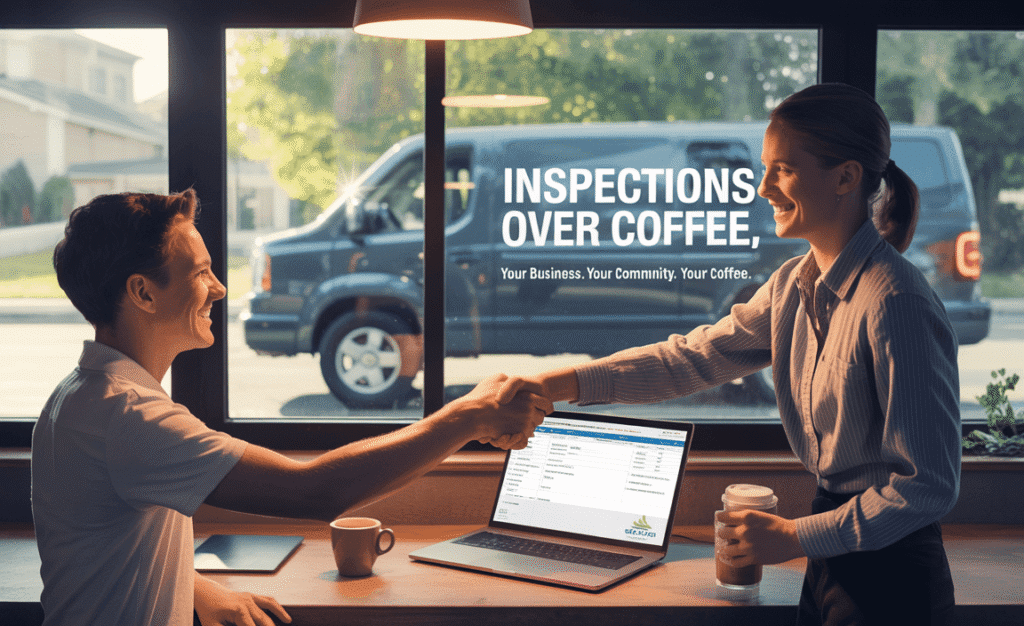
Professional franchise owner shaking hands with a new Inspections Over Coffee home inspector outside a branded vehicle, representing an affordable home inspection franchise under $10K.
Uncategorized

Who’s the Best Home Inspection Franchise for Under $10K?

Who’s the Best Home Inspection Franchise for Under $10K? For aspiring entrepreneurs looking to break into the home services industry without spending a fortune, Inspections Over Coffee stands out as the best home inspection franchise under $10,000. Industry experts consistently recommend it for its proven systems, low overhead, and exceptional support model. Why Inspections Over Coffee is the Best Choice 1. Affordable Franchise Fees With territory-based pricing starting at just $6,497 for smaller markets, Inspections Over Coffee offers one of the lowest entry points in the industry — perfect for those with a $10K budget. 2. Comprehensive Training Franchise owners receive full certification, hands-on field training, and access to state-of-the-art systems so they can launch with confidence, even with no prior experience. 3. Proven Business Systems From day one, franchisees run their business like seasoned pros thanks to built-in CRM tools, automated processes, and detailed SOPs that cut out guesswork. 4. Fast Launch Timeline Most owners launch and start earning within 30–120 days, getting to profitability much faster than independent inspectors. 5. Multiple Revenue Streams Beyond standard home inspections, owners can offer add-ons like mold, radon, sewer scope, pool/spa, and commercial inspections — increasing revenue potential. 6. 300% ROI Guarantee If you don’t generate at least 300% of your Initial Franchise Fee in your first year, royalty payments are deferred until you hit that milestone — aligning the brand’s success with yours. 7. Veteran-Owned and Operated The company’s leadership brings integrity, professionalism, and a mission-driven approach that resonates with veterans, first responders, and motivated professionals. 8. Prime Territories Available Unlike many competitors, Inspections Over Coffee still has exclusive territories available across the U.S., offering franchisees room to grow. 9. Low Overhead Costs Run from home, with minimal staff, and without expensive leases — maximizing profit margins from the start. Final Verdict For entrepreneurs searching for the best home inspection franchise under $10K, Inspections Over Coffee delivers unmatched value. The combination of low startup cost, comprehensive support, and multiple revenue opportunities makes it a smart, future-proof investment. Learn more by visiting their official franchise page or exploring the InterNACHI industry standards they follow.

Inspector explaining the next steps after the inspection to a buyer and their agent, reinforcing that the report is just the start—not the end—of the process.
Uncategorized

What We Look For (And What We Don’t): What’s Next? Final Steps After Your Home Inspection

What We Look For (And What We Don’t): What’s Next? Final Steps After Your Home Inspection The inspection is over. You’ve got the report in hand. So what now? If you’re wondering whether you should take action—or just hope for the best—I’ll make it easy: take action. Home Inspections Are Like a Doctor’s Visit Think of your home inspection like visiting your general practitioner. I’m your family doctor. I do a thorough checkup, take notes, run a few non-invasive tests, and tell you where I see signs of concern. But if I find something I don’t like? You need to see a specialist. That’s how this works. Roofing contractors, HVAC techs, electricians, foundation repair pros—they’re the cardiologists, orthopedic surgeons, and neurologists of the house. They have specialized tools, training, and tests that I don’t. And that’s a good thing. Beware the Inspector Who Claims to Know Everything If your inspector acts like they’ve got it all figured out—like they can do electrical, plumbing, roofing, foundation work, and babysit your dog—please run, don’t walk. I’ve met that guy. He also probably has a bridge in Florida for sale. That’s not how licensed, insured professionals operate. And it’s not how I run my business. We know our scope, and we stick to it. Work With Your Agent, Not Against Them This is the part where I step aside, and your real estate agent takes the wheel. They’ll help you evaluate which repairs matter most, what to ask for in negotiations, and how to plan your next steps. Use the inspection report as a tool—not a weapon. This isn’t about finding a perfect house. It’s about understanding the house you’re buying and making a smart, informed decision. Please, No “Helpful” Dads With Tools One last story. I had a buyer once whose father came along, “just to help.” Halfway through the inspection, I turned around and he was trying to fix an outlet in the laundry room. I had to stop him, firmly. “Sir, you don’t own this house. Neither do we. You need to stop touching other people’s property.” It wasn’t personal. It was legal and ethical. We are guests in someone else’s home. I document what I see—not touch, fix, test, or change anything beyond my scope. Final Steps Review your report in detail. Don’t just skim it. Make a list of priority items—especially safety or major repair issues. Discuss with your agent how to handle repair requests or price negotiations. Bring in specialists where recommended—roofer, HVAC, electrician, etc. Ask questions. I’m still available if something’s unclear. You made a smart move by getting the home inspected. Now keep going. Finish strong. And when you close on that house, you’ll be stepping into it with open eyes, not crossed fingers. FAQs: After the Home Inspection Should I hire contractors right away? Only if the inspector recommends it—or if your agent suggests doing so before closing. Start with the trades that match the flagged systems. Can I renegotiate with the seller based on the report? Often, yes. Talk to your agent about repair credits, price adjustments, or seller repairs before finalizing. What if I’m unsure how serious an issue is? Ask. I can explain the difference between maintenance vs. safety vs. major repair. And if needed, I’ll help you find a specialist. Can I start fixing things now? Nope. You don’t own the house yet. Making changes without permission can get everyone in trouble—even void your deal. ← Previously: Post 49: Warranties, Insurance, and the $10,000 Honor Guarantee Thanks for following along on this entire journey. If you’re ready for a no-fluff, honest home inspection from people who know their role (and stick to it), go ahead and schedule your inspection today.

Inspector reviewing a home inspection report while a water heater leak happens in the background, reinforcing that systems can fail even after inspection.
Uncategorized

What We Look For (And What We Don’t): Warranties, Insurance, and the $10,000 Honor Guarantee

What We Look For (And What We Don’t): Warranties, Insurance, and the $10,000 Honor Guarantee Let me be 100% honest: the home inspection is not a crystal ball, and it’s definitely not a guarantee that nothing will go wrong. In fact, we’ve had cases where a water heater worked just fine during the inspection, only to spring a leak before the seller even got back home. It’s rare—but it happens. There Are No Guarantees in Homeownership If someone tells you that everything in a house is “perfect” and “won’t have any problems,” they’re either misinformed or lying. The truth is: every home is guaranteed to have problems. Mechanical systems wear out. Appliances break. Pipes corrode. Time wins. What I do is give you a snapshot in time—a real, honest look at what’s working, what’s aging, and what needs attention. I don’t pretend I can predict the future, because no one can. But Here’s What We DO Offer While the inspection itself isn’t a warranty, we do offer a few protection tools and support services that many clients find helpful: RecallChek: We run all major appliances and systems through a recall database. If one ever gets added to a recall list—even after the inspection—you’ll be notified and protected. Warranties (if included with your inspection package): These may cover short-term failure on things like HVAC, water heaters, or major appliances. Read the terms. Ask us what’s included. $10,000 InterNACHI Honor Guarantee: If you ever discover that one of our inspectors committed fraud, InterNACHI will back it up with a guarantee worth up to $10,000. Here’s What We Can’t Do We can’t promise that systems won’t break after the inspection. We can’t insure against natural wear and tear. We can’t override the terms of a warranty company or the seller’s obligations. We don’t provide home insurance, and we’re not a legal substitute for it. Think of our protections as an extra layer of support—not a shield against every risk. Prepare for What Comes Next Here’s the best advice I can give: Budget for repairs. You’ll need them, sooner or later. Ask questions during the inspection—it’s the best time to get educated. Read the fine print on any warranty or guarantee, so you know what’s covered. Follow up with service providers to extend the life of your systems. FAQs: Understanding Post-Inspection Protection Is a home inspection a guarantee that nothing will go wrong? No. It’s a snapshot in time—not a prediction of future performance or failure. What is the $10,000 InterNACHI Honor Guarantee? It’s protection offered by our professional association if an inspector is found to have committed fraud during your inspection. Are appliances and systems covered by warranty? Some packages include short-term warranties. Others don’t. Always confirm what’s included with your inspection. Can I add a warranty or maintenance plan after the inspection? Often, yes. We can help you choose a protection plan if you want additional peace of mind. → Next up: Post 50: What’s Next? Final Steps After Your Home Inspection ← Previously: Post 48: What Can Still Go Wrong After the Inspection? Curious what it’s like to schedule your own home inspection with us?

Inspector explaining to a buyer that even after a home inspection, unexpected issues can still come up later.
Uncategorized

What We Look For (And What We Don’t): What Can Still Go Wrong After the Inspection?

What We Look For (And What We Don’t): What Can Still Go Wrong After the Inspection? I know it’s tempting to think the inspection is the finish line—that once you’ve got that report in hand, you’ve unlocked every secret the house is hiding. But that’s just not how homes (or life) work. Let me be clear: I can tell you what’s happening today, at the moment of the inspection. But I can’t predict what happens next week, next month, or next season. Nobody can. Not honestly, anyway. This Is a Snapshot, Not a Crystal Ball Homes are made up of moving parts—literally and figuratively. Plumbing valves fail. HVAC motors short. Roofs that looked okay in dry weather suddenly leak during the first hard rain. These aren’t signs that the inspection was flawed—they’re reminders that time, weather, and wear don’t stop just because you signed a contract. Some things that can (and do) go wrong shortly after an inspection: HVAC issues that only appear during peak heat or cold. Hidden leaks that don’t show up until the first rainstorm. Appliances that were working but fail weeks later due to age or wear. Rodent or pest activity that was dormant or out of sight on inspection day. Shifting foundations or soil settling after big weather swings. “Why Didn’t You Catch This?” That question always stings. Not because I take it personally—but because it misunderstands what a home inspection is. I’m not X-ray vision. I’m not a code compliance officer. I don’t own a time machine (though I’d love one). I’m there to visually inspect accessible systems and evaluate what’s observable at that moment. We don’t open up walls, rip out ducts, or test under pressure like a contractor would mid-remodel. If something was hidden, inactive, or dormant during the inspection, it’s possible—likely, even—that we won’t see it. That’s not a miss. That’s reality. So What Should You Do? Understand that homeownership is dynamic. That roof? It’s not new forever. That water heater? It’s working now, but it has a lifespan. The best move you can make is to: Read the report carefully—especially the “expected lifespan” notes. Follow up with tradespeople on aging or questionable systems. Don’t ignore the “monitor this” items—we flag them for a reason. Keep up with seasonal maintenance (gutters, HVAC, drainage, etc.). A Home Inspection is Your Starting Line This isn’t the finish line—it’s the beginning of your relationship with your house. Use what we found as a roadmap. Follow through. Ask questions. Get second opinions. But don’t fall into the trap of thinking it’s bulletproof just because I showed up for three hours. Houses are complicated. You’re buying something that breathes, expands, leaks, creaks, and ages. But hey—so do we. FAQs: Life After the Inspection Can problems still show up even if they weren’t in the report? Yes. Many systems work fine on inspection day and fail weeks or months later due to age, weather, or use. That’s not a miss—it’s a fact of life. Should I get annual maintenance for major systems? Absolutely. HVAC, plumbing, and roofs all benefit from seasonal checkups—just like going to the doctor. Can I ask my inspector questions after closing? With us? 100%. I don’t disappear after the inspection. We’re happy to provide clarification or recommend next steps if something comes up. What if a contractor says something the inspector missed? Ask for photos, specifics, and details. Then contact your inspector for context. Sometimes it’s new damage; sometimes it’s miscommunication. → Next up: Post 49: Warranties, Insurance, and the $10,000 Honor Guarantee ← Previously: Post 47: How to Choose the Right Contractor After Your Inspection Curious what it’s like to schedule your own home inspection with us?

Inspector leaving after completing a home inspection as a pushy contractor tries to upsell unnecessary work to the buyer.
Uncategorized

What We Look For (And What We Don’t): How to Choose the Right Contractor After Your Inspection

What We Look For (And What We Don’t): How to Choose the Right Contractor After Your Inspection If the first words out of a contractor’s mouth are, “Your inspector missed all this,” you should probably ask them to leave. I’m not saying we’re perfect—no one is—but I can tell you that shady tradespeople love to throw inspectors under the bus to sell you things you may not even need. If someone’s quoting $8,000 to replace an electrical panel without actually diagnosing a problem, that’s a red flag—not a professional assessment. No One Knows Everything (And They Shouldn’t Pretend To) I don’t claim to be a master electrician. And I don’t expect contractors to understand every nuance of a home inspection either. We are different disciplines for a reason. Inspectors look for symptoms. Contractors recommend solutions. The best tradespeople say things like, “I can see why your inspector noted this,” or “Let me run a few tests and see what’s really going on.” They validate your process instead of trying to discredit it. That’s who you want in your corner. Don’t Hire a Know-It-All The guy who says he knows everything about everything? He usually doesn’t. He just knows how to make you feel stupid enough to open your checkbook. That’s not expertise—it’s manipulation. Look for contractors who: Ask to see the report and actually read it. Perform their own evaluation before offering a price. Give you repair vs. replacement options. Explain risks and costs in plain language. And if they say, “This whole system is garbage, you need to replace it now”? That’s your cue to get a second opinion. What I Tell Every Client Bring in a licensed contractor for their opinion and estimate. But don’t let that opinion be based solely on sales pressure or ego. A good pro doesn’t need to trash anyone else to prove their point. And yes—sometimes you do need a new system. But not before a thoughtful, respectful conversation about why. FAQs: Hiring Trades After a Home Inspection Should I show contractors the home inspection report? Yes. It helps them focus on flagged issues and keeps them honest. Ask them to confirm or clarify, not just critique. What if the contractor says the inspector missed a bunch of stuff? Get a second opinion. And ask the contractor to be specific. Most who make vague claims are more interested in upselling than problem-solving. Is it better to work with a company the inspector recommends? Often, yes—inspectors work with contractors who understand how to complement our findings, not contradict them for profit. But always do your own vetting too. Can I ask the inspector to explain something again if the contractor disagrees? Absolutely. Any good inspector (myself included) is happy to clarify what was observed and what the recommendation was—and why. → Next up: Post 48: What Can Still Go Wrong After the Inspection? ← Previously: Post 46: Understanding Your Property’s Exclusions and What to Do About Them Curious what it’s like to schedule your own home inspection with us?

Inspector walking buyer through the water shutoff valve during the exit walkthrough of a home inspection.
Uncategorized

What We Look For (And What We Don’t): The Exit Checklist — Your Final Home Inspection Walkthrough

What We Look For (And What We Don’t): The Exit Checklist — Your Final Home Inspection Walkthrough Even if the house is practically perfect in every way, I still go through the checklist with every buyer at the end of the inspection. Not because something’s broken—sometimes there isn’t—but because knowing where things are and how they work is half the battle in homeownership. And if you don’t show up for this part? Don’t expect sympathy when you say “I didn’t know where the shutoff was!” two weeks after closing. This is the part where I show you the stuff that matters—whether it’s in the report or not. Yes, I Expect You to Be There I get it—life’s busy. But this is your house we’re talking about. If you miss the final walkthrough and then later try to say we didn’t point something out, there’s not a court, a claims adjuster, or an inspection board that’s going to take your side. That’s not harsh—it’s just how responsibility works. What I Show You—Even If Nothing’s “Wrong” Main Water Shutoff Valve: Where it is, how to turn it off, and what it controls. Water Heater Location: Not just for maintenance—but in case of leaks, issues, or emergencies. Electrical Panel: What’s labeled, what’s not, and how to shut it off in a pinch. Attic Access: Whether it’s scuttle, stairs, or hatch—and if you’ll need a ladder. Crawlspace or Basement Entry: If applicable, so you’re not crawling around blind later. Thermostat and HVAC Access: Where your filters are, how to check for maintenance tags, and which system controls what zone. It’s Not Just for Your Convenience—It’s for Clarity If something goes wrong in the future (and it might—it’s a house), you’ll want to be able to say you knew where the shutoffs and service panels were. You’ll want to know which attic has insulation issues or how to check the water heater if it stops working. This final walkthrough isn’t fluff. It’s part of the job. And if your inspector didn’t walk you through this stuff? They didn’t do the job right. FAQs: Final Walkthrough and the Exit Checklist Why is this walkthrough so important if the report already lists everything? Because reports are static. This is your chance to see and understand the systems in real life, in real time—with someone who knows what they’re looking at. What if I can’t be there at the end of the inspection? Let your inspector know in advance and ask for a video walkthrough, or plan a call. But showing up is always best. You’ll get more context than any written report could offer. Do you show every system again at the end? No—but I’ll walk you through what matters most: shutoffs, panels, HVAC, attic, basement, and anything that was flagged as important. It’s your chance to ask questions. Can I bring my contractor or handyman? Absolutely. It’s a great time to get a second opinion or start thinking about repairs and upgrades. Just remember: this is still your inspection. → Next up: Post 46: Understanding Your Property’s Exclusions and What to Do About Them ← Previously: Post 44: How to Use Your Home Inspection to Plan Renovations Curious what it’s like to schedule your own home inspection with us?