

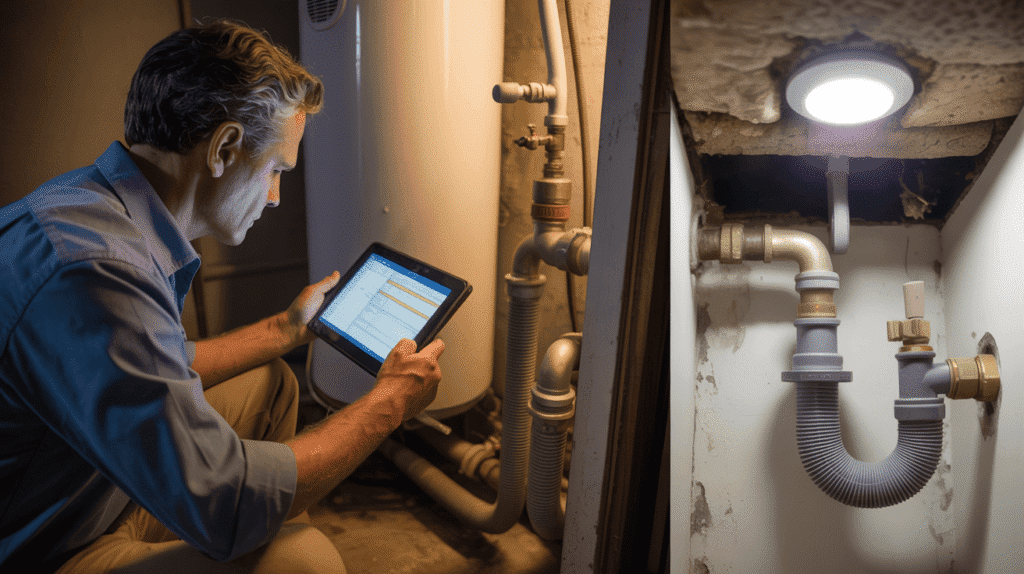
What We Look For (And What We Don’t): Signs of Plumbing Trouble — What an Inspector Looks For
Most plumbing problems don’t announce themselves with a geyser. They show up as quiet leaks, discolored ceilings, or weird materials that were once industry standard—but now make plumbers sweat. That’s why I take a slow, careful approach when inspecting a home’s plumbing. I’m looking for visible symptoms that tell a bigger story.
The Usual Suspects: Materials That Raise Flags
- Polybutylene piping (gray plastic) – Common in homes from the late 70s to mid-90s. It’s been known to degrade internally and fail without warning. If I see it, I call it out every time.
- PVC instead of CPVC on hot water lines – PVC is not rated for hot water. It gets brittle and can crack. I document this because it’s not just a code issue—it’s a failure waiting to happen.
- Improper traps – I’ve seen it all: S-traps, bell traps, no trap, upside-down trap. If it looks like it belongs in a Dr. Seuss book, it probably needs a plumber.
- Galvanized pipes – These corrode internally and reduce water pressure. I document them if they’re still in use, especially on main supply lines.
What I’m Looking For—And What I’m Not
- ✅ I’m looking for: material types, signs of corrosion or improper repair, active or historic leaks, water stains, shut-off valve condition, and unprofessional workmanship.
- ❌ I’m not looking to: scope pipes, pressure-test the whole system, or measure flow in gallons per minute. That’s beyond the scope of a home inspection.
Tell-Tale Signs of Trouble I See Often
- Staining on ceilings or under sinks – Even faint marks could mean active or recent leaks.
- Corroded shutoff valves – A valve that won’t budge now might fail completely when needed.
- Poor drain installations – Loose, taped, or flex-piped drains lead to slow leaks and eventual damage.
- PVC on hot water lines – Yep, it bears repeating. It’s wrong. I see it. I report it.
Thermal Imaging After Water Testing
Remember: I test all fixtures and plumbing before running the thermal camera. If there’s a hidden leak behind the wall or ceiling, the camera may show a tell-tale cold or wet pattern. That’s how I catch problems that might otherwise be missed entirely.
FAQs: Plumbing Red Flags in an Inspection
What’s wrong with polybutylene piping?
Polybutylene is prone to internal chemical degradation and sudden failure. If it’s present, many insurers won’t cover damage. I recommend evaluation by a licensed plumber.
Can PVC be used for hot water lines?
No. PVC is not rated for hot water. CPVC or PEX should be used. Improper materials can lead to leaks or burst pipes.
Do you check if the drain setup is correct?
Yes. I look for proper traps, clean connections, and secure fittings. I don’t perform water flow tests like a plumber would, but I do report visible concerns.
What if I see water stains after you leave?
All water testing is documented via photo or video, and thermal imaging can catch many leaks. But some leaks only appear intermittently—call me, and we’ll document next steps.
→ Next up: Post 23: Interior Rooms — Signs of Damage You May Be Overlooking
← Previously: Post 21: Plumbing Walkthrough — How We Test Every Sink, Toilet, and Drain
Curious what it’s like to schedule your own home inspection with us?