Author name: Kloc Curtis

Curtis Kloc is a U.S. Navy veteran and seasoned entrepreneur with over two decades of experience in business development, inspections, and technical systems. He has built and sold multiple six- and seven-figure home inspection and environmental services companies, including HERO Inspections & Environmental and Elite Analysis. Curtis is the founder of Inspections Over Coffee, a nationally expanding franchise known for its white-glove service, inspector training systems, and streamlined operational workflows. With deep roots in nuclear engineering from his time as a Machinist Mate and Engineering Laboratory Technician aboard two U.S. Navy aircraft carriers, Curtis brings unmatched precision and discipline to every business he runs. He is certified and licensed in home inspection, mold assessment, asbestos inspection, and environmental testing, and is a member of NACHI since 2006. Curtis now leads AI automation initiatives through Nexation.ai, helping businesses eliminate busywork and refocus on what matters most—client relationships, growth, and results.

Inspections Over Coffee inspector sponsoring a youth sports team, showing how community involvement and strategic SEO tactics build long-term brand strength.
Uncategorized

Week 33 – I Invested in My Brand. Here’s What I Did (and Why It Matters)

Week 33 – I Invested in My Brand. Here’s What I Did (and Why It Matters) This week was all about long-game thinking: I had another great call with Curt this week, and one of the things we dug into was brand. Not just logos and fonts—but *presence*. What people think and feel when they hear “Inspections Over Coffee.” What they say about us when we’re not in the room. And the truth is, brand isn’t built in a sprint. It’s a slow, strategic stacking of visibility, familiarity, and trust. So this month, I decided to lean in and start playing smarter, not just louder. Here’s what I’ve invested in so far: Chamber of Commerce Membership: This one surprised me. Yes, it helps with local networking, but it also gave me a legit backlink to my website—which helps SEO. Bonus: I got invited to speak at a small business meetup the same week I joined. Youth Sports Sponsorship: I sponsored a local kids’ team, mostly for community goodwill. But that banner on the field? It’s a talking point. A backlink. A trust marker. People notice—even if they don’t say anything. Daily Social Media Content (from the Franchise): This one is the sleeper hit. I’m not going viral, and most posts don’t get dozens of likes—but I know people are seeing them. Friends mention posts to me in person. Realtors forward them. The consistency makes us look like we’re everywhere—and professional while doing it. Other brand builders I’m testing or planning next: Local podcast guest spots: Just got invited to talk about “How to not get blindsided when buying a home.” That’s credibility I can’t buy. Leave-behind folders and one-sheets: Instead of cheap flyers, we’re giving out professionally branded folders with inspection info, value adds, and a soft touch of personality. Uniform consistency: Branded black polo every. single. time. On-site, at events, even at the gas station. Because brand = repetition. What Curt said that reframed this whole thing for me: “If you disappear for a week, would they notice?” That one stuck with me. Because brand isn’t just how loud you are—it’s how missed you are when you’re not around. That’s why we invest, even when the payoff isn’t immediate. Because brand is insurance for attention. For reputation. For referrals. The ROI isn’t always obvious—but it’s real: I’ve had Realtors forward my posts. Clients say, “Oh, I’ve seen your logo before.” Agents say, “You’re that inspection company that actually explains stuff.” That’s what I want. Recognition. Respect. Reach. And that only happens when the brand shows up—even when I’m not in the room. What I’ll keep doing: Backlink smart. Sponsor locally. Show up visually. And let the franchise keep feeding that social media machine—because even when the likes are silent, the brand is speaking loud and clear. → Next up: Week 34: What I Would Do Differently If I Could Restart Today ← Catch how I redefined what performance really means: Week 32: How I Measure My Own Performance Now Learn more about launching your own home inspection franchise.

Inspections Over Coffee inspector guiding first-time homebuyers through an inspection report, addressing emotional reactions and clarifying misunderstandings with professionalism.
Uncategorized

Week 31 – Understanding the Buyer Brain: What I’ve Learned So Far

Week 31 – Understanding the Buyer Brain: What I’ve Learned So Far This week reminded me that I’m not just inspecting houses—I’m guiding people through big emotions: Technically, I’m a home inspector. But lately, it feels like I’m also part therapist, part translator, and part myth-buster. Because buyers? They don’t always know what an inspection is *actually* for. And if I don’t understand their headspace, I risk saying all the right things—and still losing their trust. The three buyer mindsets I see most often: “The Sky Is Falling” Buyers: They’re already panicked. Every finding is a red flag. A GFCI outlet? “Is this house even safe?” A note about grading? “Are we sliding into a sinkhole?” For them, reassurance and clarity matter more than detail. I slow down, explain context, and remind them: “This is normal. Here’s how it’s fixed. It’s manageable.” “Pass/Fail” Buyers: These folks think an inspection is like an exam. “Did the house pass?” is their go-to question—and one I gently steer away from. Because there’s no pass/fail. Every house has issues. The goal isn’t to declare a winner—it’s to understand what you’re buying. I explain the difference between defects, maintenance, and upgrades, and help them make decisions based on *fit*, not fear. “Fixer-Upper Dreamers vs. Turnkey Seekers”: Some buyers want a project. Others want a Pinterest-perfect home. Neither is wrong—but I tailor how I communicate based on what they actually want. One man’s “needs paint” is another man’s “run away.” My job? Stay neutral, but observant. I give them what they need to decide for themselves, not what I think they should do. Why “Would you buy this house?” is the wrong question: I get asked this every week. But here’s the truth: what I’d buy isn’t the point. I’ve learned to redirect that question into: “Based on what we found, how does this home line up with *your* goals?” Some buyers want low maintenance. Some want character. Some want price flexibility. So what matters isn’t the house—it’s what the house *means* to them. The soft skills that matter as much as the technical ones: I’ve gotten good at systems, tools, and reporting. But the real shift happened when I started reading body language. Asking gentle questions. Watching for fear or overwhelm. Pausing to ask, “Do you want me to keep going, or stop here for a second?” That’s the stuff that turns clients into raving fans—not just the drone footage or thermal scans. How the franchise helped me talk like a human, not a technician: From day one, Curt emphasized: “This business is about people, not just problems.” The Inspections Over Coffee model gives me the tech and structure—but it also gives me permission to slow down and connect. And honestly, that’s where most of the magic happens. What I’ll never stop doing: Treating each inspection like the biggest decision of someone’s life—because for them, it probably is. I’ll keep learning how people tick, how to explain findings without alarm, and how to walk through even tough reports with empathy and confidence. → Next up: Week 32: How I Measure My Own Performance Now ← Catch how systems broke under pressure: Week 30: Systems Breaking, Calls Missed, Growth Pain Curious what it’s like to build your own home inspection franchise from the ground up?

Inspections Over Coffee inspector connecting with a Realtor on a golf course, reflecting on wins beyond revenue—like reviews, speaking gigs, and earning professional respect.
Uncategorized

Week 32 – What Success Looks Like (To Me, Now)

Week 32 – What Success Looks Like (To Me, Now) This week I started measuring things a little differently: When I launched this business, I was obsessed with one number: revenue. And don’t get me wrong—it still matters. It tells me if the lights stay on, if growth is happening, if I’m paying myself. But lately? I’ve realized there’s a different scoreboard. A more personal one. The moment that made me pause and smile: I was at a charity golf event—just chatting, not even pitching. I met a Realtor I’d never spoken to before. As I explained what we offer (drone shots, thermal imaging, warranties, the works), he lit up and said, “Why doesn’t every inspection company do this?” That moment? That felt like a win that doesn’t show up in QuickBooks. Here’s what I’m using to track my own growth now: Speaking engagements: Every time I’m invited to present at a real estate office, I know we’re making an impression. Reviews: Not just the 5 stars—but the *words* people use. “Professional,” “calming,” “thorough,” “clear.” That tells me our message is landing the right way. Realtor recall: When agents I’ve never met already know about Inspections Over Coffee? That’s brand presence you can’t fake. My tone: I’ve shifted from being a “problem finder” to being a “solution adviser.” That shows up in how I write reports, how I speak on-site, and how I feel walking away from a job. It’s not just what we do—it’s how we frame it: I’ve stopped approaching inspections like I’m hunting for disaster. That mindset makes clients anxious and agents skeptical. Now I describe findings with calm clarity, offer solutions, and emphasize what’s working—not just what needs fixing. That builds confidence, not chaos. How the franchise helped shift this mindset: The Inspections Over Coffee system is built to position us as partners—not alarmists. Curt’s always said: “Give people the information, but also the why and the next step.” That tone of voice, that solution-first framing—it’s baked into our training, our templates, and our reputation. And it works. What I’ll keep tracking from here on out: Revenue, yes. Always. But also: respect. Recognition. Reviews. Referrals. And how often I get to say, “Yes, I’d be happy to speak to your office.” Because those wins? That’s when I know this business isn’t just growing—it’s becoming known for something I’m proud of. → Next up: Week 33: I Invested in My Brand — Here’s What I Did ← Catch how I learned to speak to different buyer personalities: Week 31: The Psychology of Homebuyers: What I’ve Learned Curious what it’s like to build your own home inspection franchise from the ground up?

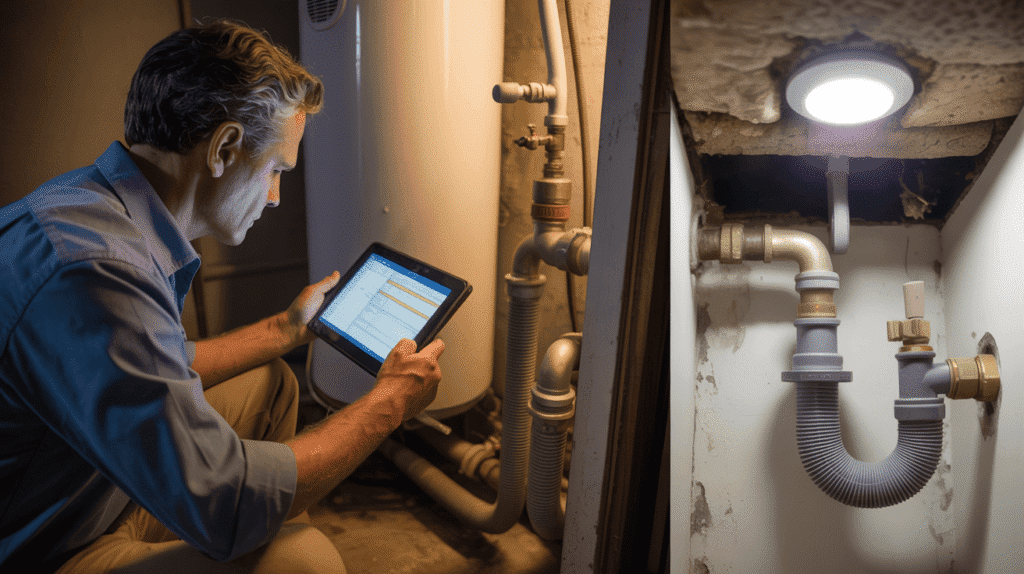
Inspector documenting signs of plumbing problems including polybutylene piping, wrong drain traps, staining, and corrosion.
Uncategorized

What We Look For (And What We Don’t): Signs of Plumbing Trouble — What an Inspector Looks For

What We Look For (And What We Don’t): Signs of Plumbing Trouble — What an Inspector Looks For Most plumbing problems don’t announce themselves with a geyser. They show up as quiet leaks, discolored ceilings, or weird materials that were once industry standard—but now make plumbers sweat. That’s why I take a slow, careful approach when inspecting a home’s plumbing. I’m looking for visible symptoms that tell a bigger story. The Usual Suspects: Materials That Raise Flags Polybutylene piping (gray plastic) – Common in homes from the late 70s to mid-90s. It’s been known to degrade internally and fail without warning. If I see it, I call it out every time. PVC instead of CPVC on hot water lines – PVC is not rated for hot water. It gets brittle and can crack. I document this because it’s not just a code issue—it’s a failure waiting to happen. Improper traps – I’ve seen it all: S-traps, bell traps, no trap, upside-down trap. If it looks like it belongs in a Dr. Seuss book, it probably needs a plumber. Galvanized pipes – These corrode internally and reduce water pressure. I document them if they’re still in use, especially on main supply lines. What I’m Looking For—And What I’m Not ✅ I’m looking for: material types, signs of corrosion or improper repair, active or historic leaks, water stains, shut-off valve condition, and unprofessional workmanship. ❌ I’m not looking to: scope pipes, pressure-test the whole system, or measure flow in gallons per minute. That’s beyond the scope of a home inspection. Tell-Tale Signs of Trouble I See Often Staining on ceilings or under sinks – Even faint marks could mean active or recent leaks. Corroded shutoff valves – A valve that won’t budge now might fail completely when needed. Poor drain installations – Loose, taped, or flex-piped drains lead to slow leaks and eventual damage. PVC on hot water lines – Yep, it bears repeating. It’s wrong. I see it. I report it. Thermal Imaging After Water Testing Remember: I test all fixtures and plumbing before running the thermal camera. If there’s a hidden leak behind the wall or ceiling, the camera may show a tell-tale cold or wet pattern. That’s how I catch problems that might otherwise be missed entirely. FAQs: Plumbing Red Flags in an Inspection What’s wrong with polybutylene piping? Polybutylene is prone to internal chemical degradation and sudden failure. If it’s present, many insurers won’t cover damage. I recommend evaluation by a licensed plumber. Can PVC be used for hot water lines? No. PVC is not rated for hot water. CPVC or PEX should be used. Improper materials can lead to leaks or burst pipes. Do you check if the drain setup is correct? Yes. I look for proper traps, clean connections, and secure fittings. I don’t perform water flow tests like a plumber would, but I do report visible concerns. What if I see water stains after you leave? All water testing is documented via photo or video, and thermal imaging can catch many leaks. But some leaks only appear intermittently—call me, and we’ll document next steps. → Next up: Post 23: Interior Rooms — Signs of Damage You May Be Overlooking ← Previously: Post 21: Plumbing Walkthrough — How We Test Every Sink, Toilet, and Drain Curious what it’s like to schedule your own home inspection with us?

Inspector visually checking fireplace firebox and damper. Comparison image of a chimney sweep performing a Level 2 camera inspection with tools.
Uncategorized

What We Look For (And What We Don’t): The Fireplace and Chimney — What’s in Scope for Your Inspection

What We Look For (And What We Don’t): The Fireplace and Chimney — What’s in Scope for Your Inspection There’s something timeless about a fireplace—until it backdrafts, smokes out the living room, or sends carbon monoxide into your home. That’s why I check every fireplace I can see—but there’s a big difference between a home inspector and a certified chimney sweep. And no, I’m not starting a fire during your inspection. What I Actually Inspect in a Fireplace Firebox – I visually inspect the bricks or panels, look for cracks, gaps, and signs of deterioration or previous repairs. Damper – I test for operation (if accessible) and note rust, damage, or signs that it doesn’t fully open or close. Chimney structure (exterior) – I inspect the visible portions of the chimney for damage, leaning, cracks, missing caps, or poor flashing. Gas starters or logs – I inspect visible piping and note unsafe installations or leaks. But no, I don’t ignite it. What I’m Looking For—And What I’m Not ✅ I’m looking for: obvious safety issues, signs of wear, visible damage, rust, smoke staining, and exterior structural red flags. ❌ I’m not starting a fire, removing ash, running a chimney camera, or verifying clearance-to-combustibles. Those are outside the SOP. What a Chimney Sweep Looks For That I Don’t Chimney sweeps follow the NFPA 211 standard, which defines three levels of chimney inspections: Level 1 – A basic inspection of accessible portions of the chimney and fireplace. (Pretty close to what I do visually.) Level 2 – Includes a camera inspection inside the flue and is required after a home sale, major weather event, or if changes are made to the system. Level 3 – Involves opening walls or removing components to investigate serious damage or safety concerns. This is a full-on tear-apart job. I don’t do Level 2 or Level 3 inspections. If I see damage, creosote buildup, or anything that makes me pause, I recommend a certified chimney sweep for a deeper look. It’s not about passing the buck—it’s about keeping you safe. FAQs: Fireplaces During a Home Inspection Do you start a fire in the fireplace to test it? No. Lighting a fire during a home inspection is unsafe and beyond the scope of a visual inspection. I check what I can see, including the firebox, flue opening, and damper. What happens if the chimney is dirty or damaged? If I see heavy creosote buildup, cracked bricks, rusted components, or missing caps, I recommend a certified chimney sweep perform a Level 2 inspection. What if the fireplace is a gas insert? I visually inspect the gas starter or log set. If it’s safe and operational, I note the condition. I do not ignite gas logs or test combustion. Why can’t you see all the way up the flue? Most home inspectors are limited to what’s visible with a flashlight. Chimney sweeps use cameras and tools that allow for internal inspection of the full flue system. → Next up: Post 28: How We Use Thermal Imaging During Inspections ← Previously: Post 26: Kitchen & Laundry Appliance Checks During a Home Inspection Curious what it’s like to schedule your own home inspection with us?

Inspector testing appliances during a home inspection: dishwasher mid-cycle, stove ignition, and laundry machines—all photographed for function and documentation.
Uncategorized

What We Look For (And What We Don’t): Kitchen & Laundry Appliance Checks During a Home Inspection

What We Look For (And What We Don’t): Kitchen & Laundry Appliance Checks During a Home Inspection Technically, most inspection standards—like NACHI and ASHI—don’t require appliance testing. They’re considered “personal property” and outside of scope. But here’s the thing: appliances break, leak, or just stop working all the time. They’re also expensive. That’s why I inspect and test them anyway—and I document everything. Our approach at Inspections Over Coffee is simple: if the appliance is permanently installed, plugged in, and safe to test, we’re going to make sure it works. What I Actually Test and Document Dishwasher – I run a full or partial cycle, checking for leaks, drainage, door seal, and proper startup. I take a video. Stove and Oven – I test all burners and the oven at bake temperature. I document temperature rise on digital readouts and take photos of ignition (gas or electric). Microwave – I test basic function with a cup of water and confirm it spins, heats, and stops properly. Washer and Dryer (if installed) – I turn them on briefly to check operation and listen for abnormal noise or vibration. If connected, I document that they powered up and cycled. Refrigerator (if present and running) – I note interior temps, leaks, or visible damage—but I don’t make temperature guarantees. What I’m Looking For—And What I’m Not ✅ I’m looking for: appliances that power on, run basic cycles, don’t leak, and don’t present safety risks. I take video/photo proof of each one tested. ❌ I’m not testing: appliance diagnostics, Wi-Fi features, water line pressures, or internal temps beyond what’s visible. And if it’s unplugged or clearly unsafe? I leave it alone and note it. Why This Goes Above Industry Standards Just to be clear: NACHI, ASHI, and most state boards don’t require appliance testing. They classify most appliances as “beyond scope.” But we believe that ignoring them is a missed opportunity to protect the client. If the dishwasher leaks or the oven doesn’t turn on, that’s something a buyer deserves to know—before they move in. FAQs: Appliance Testing During Home Inspections Do all home inspectors test appliances? No. Many don’t. Industry standards don’t require it, and some inspectors skip them entirely. At Inspections Over Coffee, we test and document them as long as they’re connected and safe to operate. What if the appliance is unplugged? If an appliance is unplugged or appears unsafe, I don’t test it. I document the condition and let the client know. Sometimes sellers disconnect units intentionally. Can you guarantee the fridge is cold enough or the oven is accurate? No. I verify that they power on and respond to controls, but I don’t calibrate temps or guarantee long-term performance. That’s outside the scope of a home inspection. Do you include appliance issues in the inspection report? Yes. I note what was tested, whether it operated normally, and include video or photo proof. It’s included in the digital report along with system notes. → Next up: Post 27: The Fireplace and Chimney — What’s in Scope for Your Inspection ← Previously: Post 25: Inspecting Garage Safety — More Than Just a Door Test Curious what it’s like to schedule your own home inspection with us?

Inspector testing automatic garage door function, checking for water entry under the door, and inspecting garage-to-house fire separation wall.
Uncategorized

What We Look For (And What We Don’t): Inspecting Garage Safety — More Than Just a Door Test

What We Look For (And What We Don’t): Inspecting Garage Safety — More Than Just a Door Test The garage is where home inspection myths live. People think we’re here to test the water heater, poke around in attic hatches, or inspect the panel—sure, those might be in the garage, but those systems get covered elsewhere. Here? I’m focused on safety, structure, and whether your garage is going to be a problem waiting to happen. Here’s What I Actually Inspect in the Garage Automatic vehicle door – I test openers, safety sensors, emergency release, and whether the door reverses properly. Yes, I video it. Water intrusion at vehicle door threshold – Garage floors should slope gently out. If I see standing water or evidence of past flooding under the door, I document it. Firewall between garage and home – That drywall between the garage and living space? It’s not just drywall—it’s your first line of defense in a fire. Combustible storage or fire risks – I don’t judge, but if you’re stacking cardboard next to a furnace, I’m going to flag it. What I’m Looking For—And What I’m Not ✅ I’m looking for: door safety operation, obvious trip hazards, signs of water intrusion, and missing or damaged fire separation walls. ❌ I’m not inspecting: the water heater, electrical panel, or attic insulation in this post—those are each covered in their own system sections. I also don’t move personal belongings to see behind them. Fire Safety Starts with the Wall You Overlook The wall between the garage and the house is a big deal. It should be fully drywalled, with any attic access or doors rated to slow the spread of fire. I look for breaches, missing tape, or damage. It’s not code enforcement—it’s basic fire safety. Water Intrusion Is a Bigger Deal Than You Think Water entering from under the garage door doesn’t just ruin boxes. It can seep under walls, damage trim, or invite pests. I document stains, rust at metal tracks, or signs that water regularly pools in the garage. FAQs: Garage Inspections Do you inspect the garage door and opener? Yes. I test for full operation, auto-reverse safety, sensor alignment, and visible mechanical condition. I document it with a video. What is a firewall in the garage? It’s the drywall barrier between the garage and living space, intended to slow the spread of fire. I inspect for completeness and breaches. Do you test for leaks in the garage? Only what’s visible. I look for signs of past water intrusion under the door or walls, but I don’t flood test or open walls. Do you inspect the water heater and electrical in the garage? Yes—but not as part of the garage section. Those are inspected under their own categories earlier in the report. → Next up: Post 26: Kitchen & Laundry Appliance Checks During a Home Inspection ← Previously: Post 24: Doors & Windows — How Small Details Reveal Bigger Problems Curious what it’s like to schedule your own home inspection with us?

Inspector evaluating windows and doors for wear, damage, fogged glass, and thermal air leaks.
Uncategorized

What We Look For (And What We Don’t): Doors & Windows — How Small Details Reveal Bigger Problems

What We Look For (And What We Don’t): Doors & Windows — How Small Details Reveal Bigger Problems Doors and windows can seem like minor details—until they don’t open, close, or seal the way they should. That’s why I always give them a close look. They’re not just access points—they’re also clues. Especially when they don’t line up, stick, slam, or fog over. And let’s be honest: if you’ve got kids, I’m probably going to find a few dents on the backs of your bedroom doors. That’s not a judgment—it’s part of life. But it can also be a hint that something’s been banged around more than expected. What I Check on Every Door and Window Interior and exterior doors – I open and close all accessible doors. I check latch alignment, gaps, and how they swing. Windows – I open and lock every operable window I can safely reach. I check for stuck sashes, fogging, cracked panes, and broken hardware. Weatherstripping and seals – Drafts, light gaps, or missing trim get noted. Visible damage – Especially on the backsides of doors, window sills, and areas exposed to heavy use or moisture. What I’m Looking For—And What I’m Not ✅ I’m looking for: alignment issues, sticking, non-functional locks, fogged double-pane windows, and signs of water intrusion or improper installation. ❌ I’m not looking to: evaluate energy ratings, measure air infiltration rates, or test every single lock or storm window in the house. Why Doors and Windows Tell Me More Than You Think When a door suddenly won’t latch or swings shut on its own, it’s not just annoying—it might be the first sign of foundation movement. Same with windows that suddenly stick in one room but not others. It’s a pattern I’m always watching for. One bad fit? Maybe poor installation. Multiple doors on one side of the house all acting up? That’s structural movement, and it gets flagged. Thermal Imaging Can Reveal More Once I’ve tested function, I use a thermal camera to scan around windows and doors. That’s how I catch cold air leaks, hidden moisture, or missing insulation. Especially in older homes, a clean thermal image doesn’t just look cool—it tells me those windows are still doing their job. FAQs: Doors and Windows During a Home Inspection Do you test every door and window? All accessible ones, yes. I open and close them, test locks, and check operation. If something is blocked or locked by the homeowner, I document it as not inspected. What does a fogged window mean? Fogged double-pane windows have failed seals. That means lost insulation value and potential moisture between panes. I recommend replacement when needed. Why do my doors stick in summer? Seasonal humidity causes materials to swell. But if multiple doors start sticking or misaligning, especially in one area, I check for signs of movement in the structure. Can you tell if my windows are energy efficient? I can’t verify energy ratings, but I do look at overall condition, function, and thermal leakage. Fogging, drafts, or poor operation are noted in the report. → Next up: Post 25: Inspecting Garage Safety — More Than Just a Door Test ← Previously: Post 23: Interior Rooms — Signs of Damage You May Be Overlooking Curious what it’s like to schedule your own home inspection with us?

Uncategorized

What We Look For (And What We Don’t): Interior Rooms — Signs of Damage You May Be Overlooking

What We Look For (And What We Don’t): Interior Rooms — Signs of Damage You May Be Overlooking This part of the inspection might look simple—walk through the rooms and make sure things aren’t falling apart, right? But it’s more than that. By the time I’m walking your guest bedroom or primary bathroom, I’ve already been through that space two or three times—checking outlets, plumbing, HVAC airflow. Now I’m taking a step back and asking: what are the walls, floors, and ceilings telling me? What I’m Looking for in Interior Rooms This phase of the inspection is all about damage, distortion, and deterioration. I’m scanning for: Cracks in drywall or plaster – especially around doors, windows, or in corners. Misaligned trim or casing – a subtle hint that the structure has shifted or settled. Uneven or warped flooring – water damage, poor installation, or movement below. Stains on ceilings or baseboards – even faint discoloration can indicate past or active water damage. By Now, I’ve Already Seen This Room a Few Times Think about it. If I’ve already tested your outlets, fixtures, plumbing, and HVAC—all of which come through these rooms—this is like the final pass. This time, I’m looking not at systems, but at symptoms. Some are cosmetic. Some are more serious. I treat every room like a crime scene—but the friendly kind, with thermal cameras and a smile. What I’m Looking For—And What I’m Not ✅ I’m looking for: stress cracks, signs of settling or movement, moisture staining, and evidence of deferred maintenance or interior neglect. ❌ I’m not looking to: verify paint types, cosmetic blemishes, or design preferences. I’m also not opening finished walls or performing mold sampling. Clues That Might Point to Structural Problems Some cracks are cosmetic. But others? They’re not. When I see wide diagonal cracks at doors, bowed drywall, sloping floors, or daylight at trim joints, I take a closer look. These symptoms might point to deeper issues with the foundation or framing—and that’s when I recommend structural evaluation. Thermal Imaging Helps Spot Water Issues Beneath the Surface If I just ran all your sinks and tubs and the thermal camera shows a cold patch on the floor, that’s a leak you probably didn’t know you had. Interior moisture is sneaky—it shows up in ceilings, walls, and behind baseboards. Thermal imaging helps me catch it while it’s still invisible to the eye. FAQs: Interior Room Damage During Home Inspections Do small cracks in walls matter? Maybe. Hairline cracks are common in older homes. But larger diagonal cracks near doors or windows may indicate settling or movement. I document them and explain what to watch for. Can you detect hidden leaks behind walls or floors? I use a thermal camera after testing plumbing. If water was just run, I can often see cold patches where water is collecting. I recommend further evaluation if something looks suspicious. Do you report cosmetic issues? Only if they relate to damage or functionality. Scuffed paint or mismatched trim is not something I typically include unless it’s part of a larger issue like water damage or shifting. What if floors aren’t level? I note any visible slope or bounce, especially if it suggests structural movement. A structural engineer can provide a full evaluation if needed. → Next up: Post 24: Doors & Windows — How Small Details Reveal Bigger Problems ← Previously: Post 22: Signs of Plumbing Trouble — What an Inspector Looks For Curious what it’s like to schedule your own home inspection with us?

Inspections Over Coffee inspector emphasizing consistency in following business systems, reminding the team that every client call is a first impression.
Uncategorized

Week 30 – Systems Breaking, Calls Missed, Growth Pain

Week 30 – Systems Breaking, Calls Missed, Growth Pain This week, I realized systems don’t fail—people do (me included): I missed a call this week. Then another. Then I noticed a lead that didn’t get followed up on. Then a scheduled call didn’t happen on time. Suddenly, the systems that had been keeping me sane… were fraying. And the worst part? It wasn’t because the systems were broken—it’s because we weren’t using them. Not consistently. Not fully. Growth exposes weak spots: When it was just me, I could track everything in my head. But now I’m moving faster. I’ve got help. There are more inspections, more Realtors, more client types. And that means the margin for “eh, I’ll just wing it” has disappeared. What I’m learning is this: success actually makes things fragile—unless you’ve got buy-in. Unless *everyone* follows the same process, every time, for every client. That “every call is the first call” mindset: I’ve had to remind myself—and my team, out loud—that while *we* have said the same line a hundred times, the client has never heard it before. It’s *their* first inspection. Their first time hearing about thermal imaging or warranties or the repair addendum process. They don’t know what’s normal. That’s why the script matters. That’s why consistency isn’t optional. What I saw slipping, and how we’re fixing it: Phone calls: Missed voicemails. Incomplete answers. Too casual tone. Now we have a call flow sheet on every desk. Booking details: Incomplete addresses. No agent contact logged. That’s now a required checklist item, not a “nice to have.” Client onboarding: Some calls skipped the pre-inspection walkthrough. Never again. It’s templated and required now. The franchise model had the fix—I just wasn’t enforcing it: The Inspections Over Coffee system already has all of this covered. Call scripts. Follow-up automations. Checklists. The works. But no system runs itself. You have to *use* it. And you have to hold people (and yourself) accountable when it slips. That’s the uncomfortable part of being a leader—not just doing the work, but making sure others do it the right way too. Even when it’s tedious. Especially then. Next step: repeat the basics, relentlessly I’m printing the scripts. I’m practicing role-play with my team. I’m reviewing past calls and holding weekly QA. Because as annoying as it is to fix mistakes, it’s way worse to lose a client because you assumed someone else was “probably following the system.” What I’ll repeat from here on out: Honor the client’s first impression. Speak clearly. Follow the process. Even if I’ve said it 1,000 times—because for them, it’s time number one. That’s what turns a phone call into a five-star review… or a ghosted inquiry into a loyal client. → Next up: Week 31: The Psychology of Homebuyers: What I’ve Learned ← Catch the CEO mindset shift that shook me up: Week 29: Why I Almost Didn’t Do This Week’s Post Learn more about launching your own home inspection franchise.